Shop on Live Video
Led a team of six designers to create a live video commerce experience. Merging real-time shopping with livestream interaction. Managed the complex intersection of engineering's proof-of-concept, competing stakeholder visions, and a pandemic-disrupted timeline to deliver a shoppable livestream product.
Personas
The Challenge
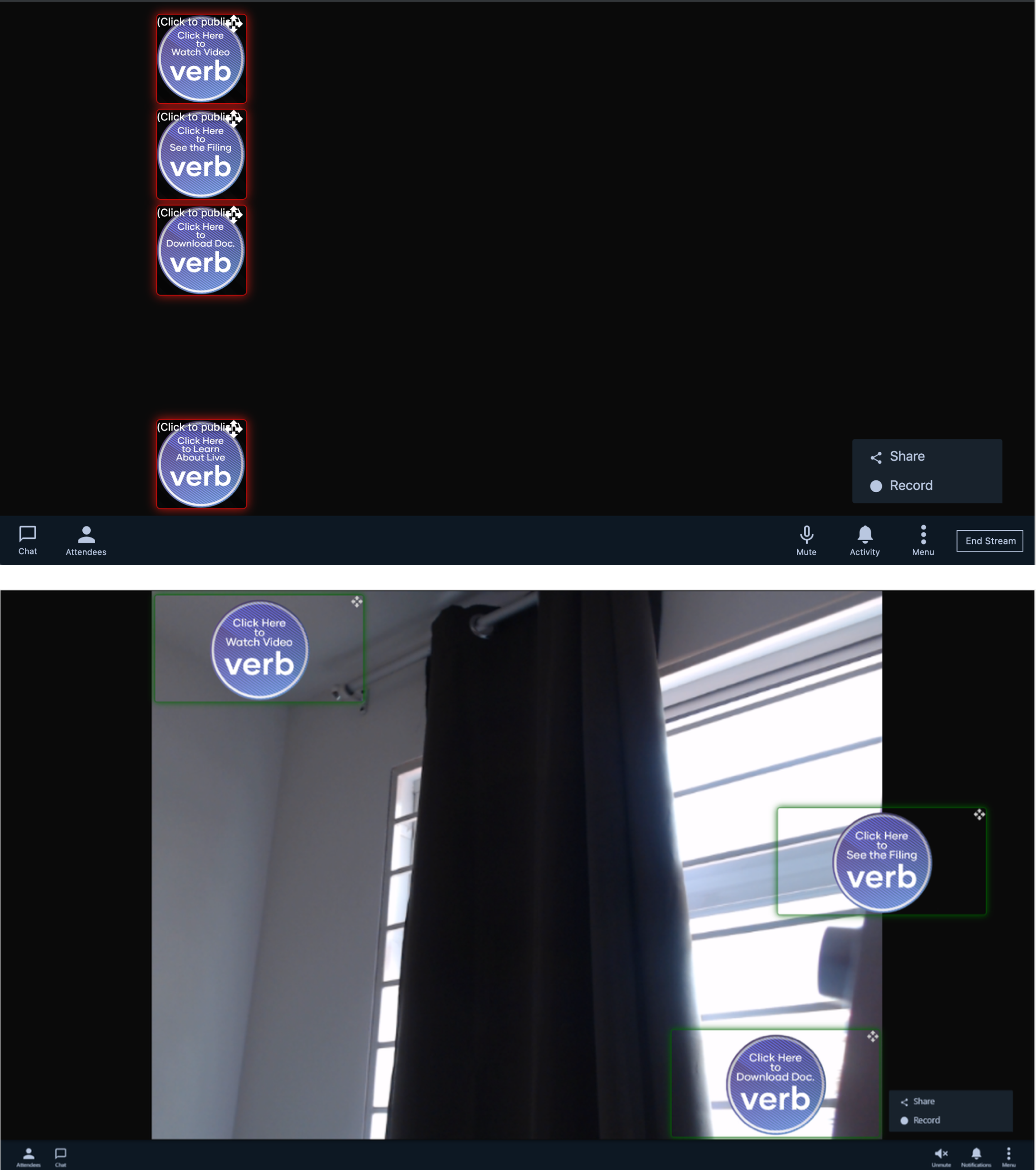
The CEO wanted to enable small businesses to sell products during live streams. Engineering had already built a proof-of-concept without PM or design involvement. A functional but unrefined live streaming capability constructed as separate, modular components.
I joined as Design Manager overseeing six designers, targeting a June 2020 launch. Following a company merger, the challenge grew: we had to serve both the existing MLM client base and a new small business segment, while merging the separate live video and interactive video products into one cohesive experience.
Scope & Complexity
- •Creating a single experience that served both direct sales (MLM) companies and small business users
- •Merging the existing interactive video product with new live streaming capabilities
- •Building mobile-first functionality on top of a desktop-oriented proof-of-concept
- •Managing competing feature requests from executives, developers, and designers. Including contact syncing, mobile web products, video libraries, and interaction saving
- •Delivering under pandemic conditions that disrupted the original timeline
Starting Point: Engineering's POC
Two Personas, One Experience
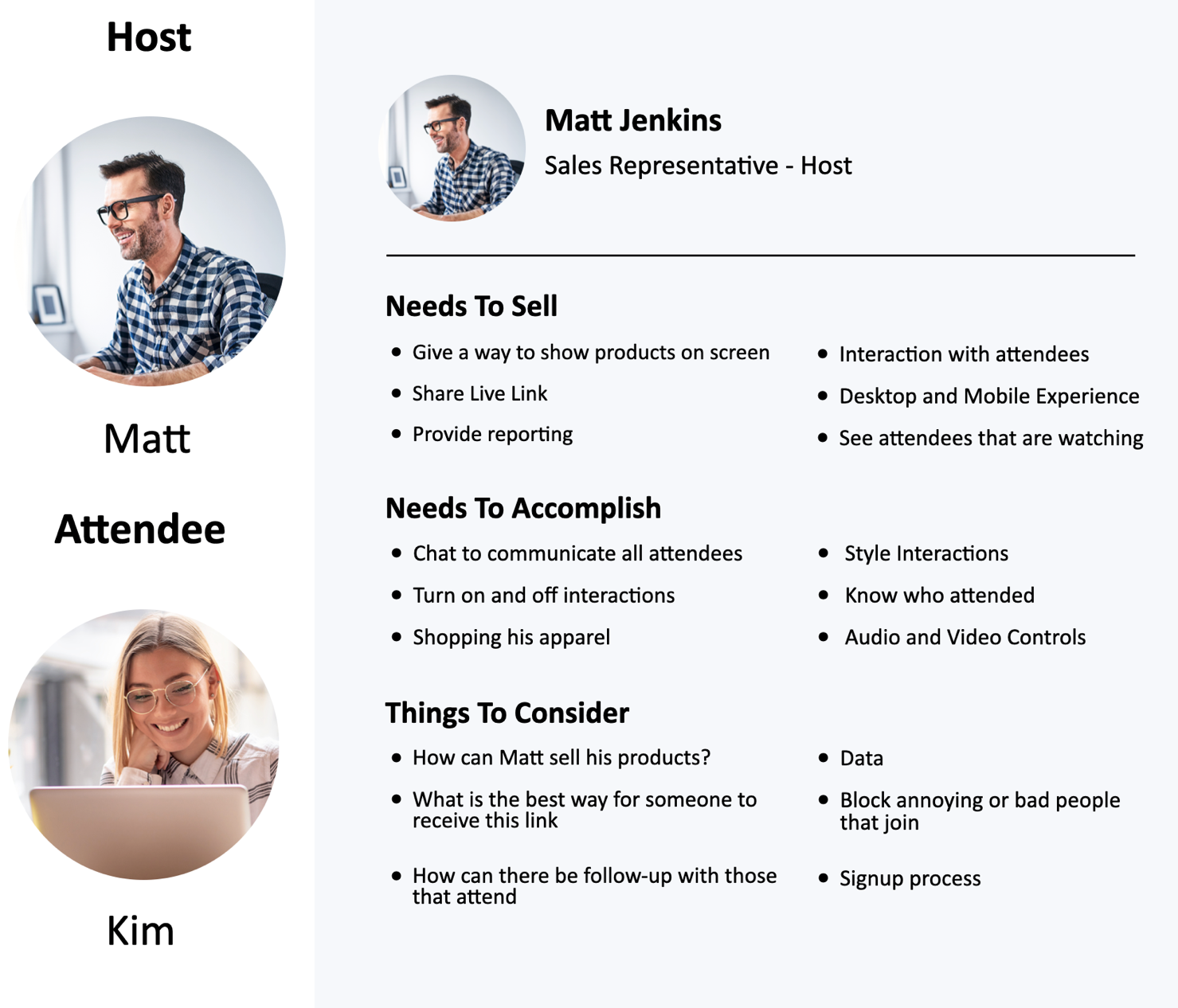
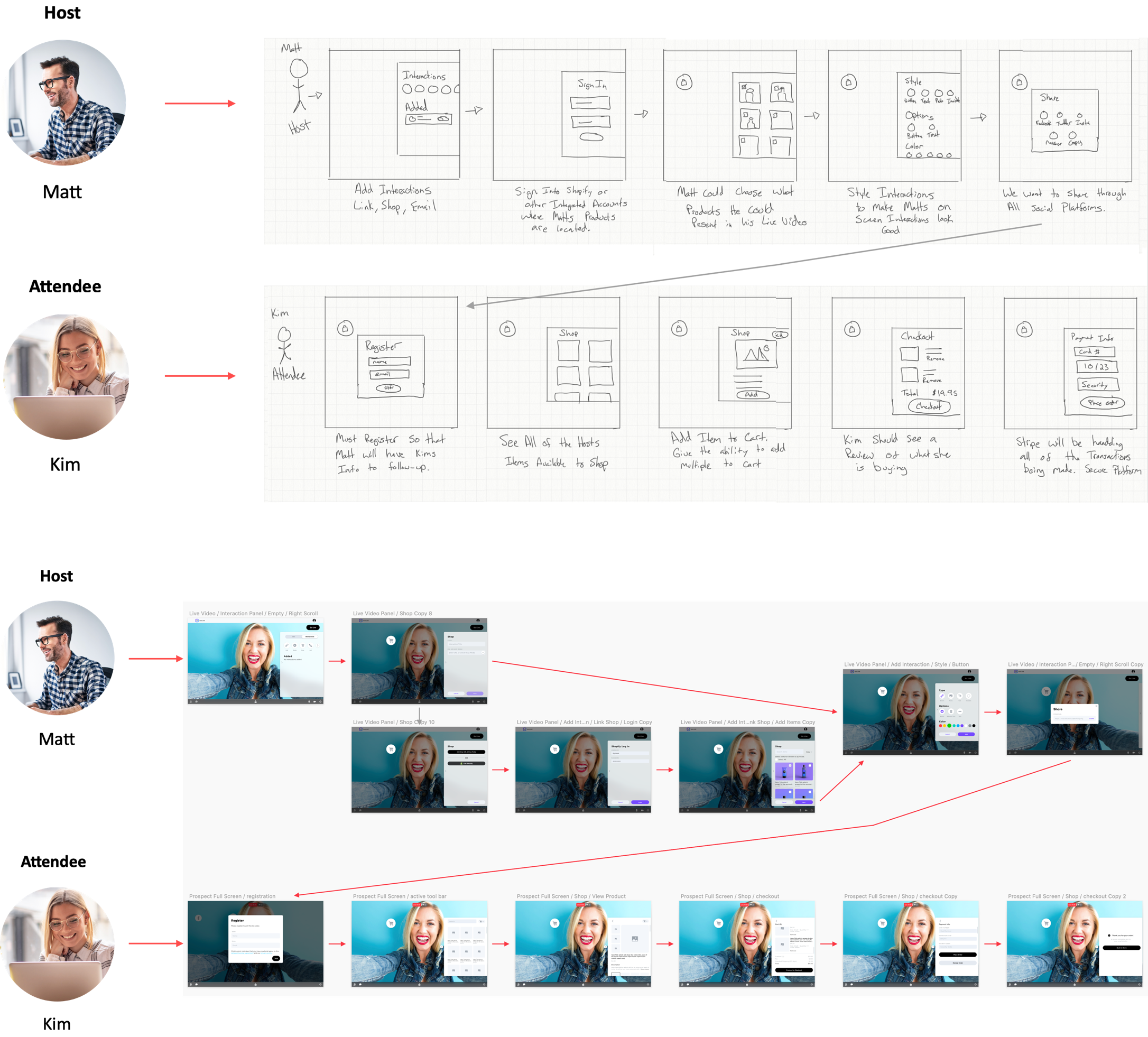
I developed two core personas: the Host (setting up streams, curating products, sending invites) and the Attendee (receiving invites, watching, and purchasing). The personas were kept intentionally generic to serve both the MLM and small business user bases. A deliberate decision to avoid fragmenting the experience.
The dual-persona complexity was the hardest design challenge. Every feature had to work seamlessly from both perspectives. Particularly the Shop feature, where Hosts needed to connect Shopify accounts and curate items while Attendees needed a frictionless browsing and purchasing flow.
Information Architecture
Team Assignments
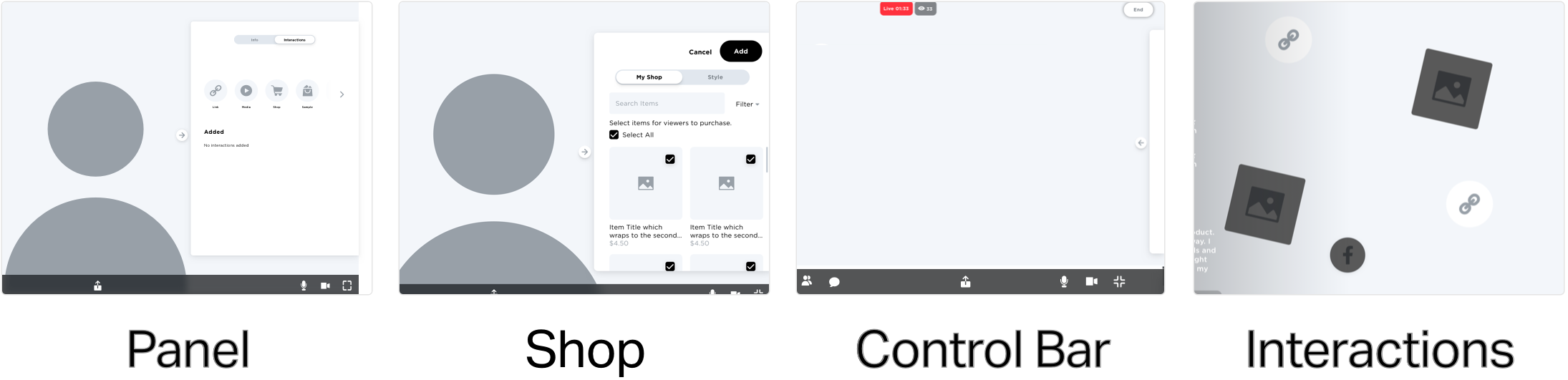
Managing the Team
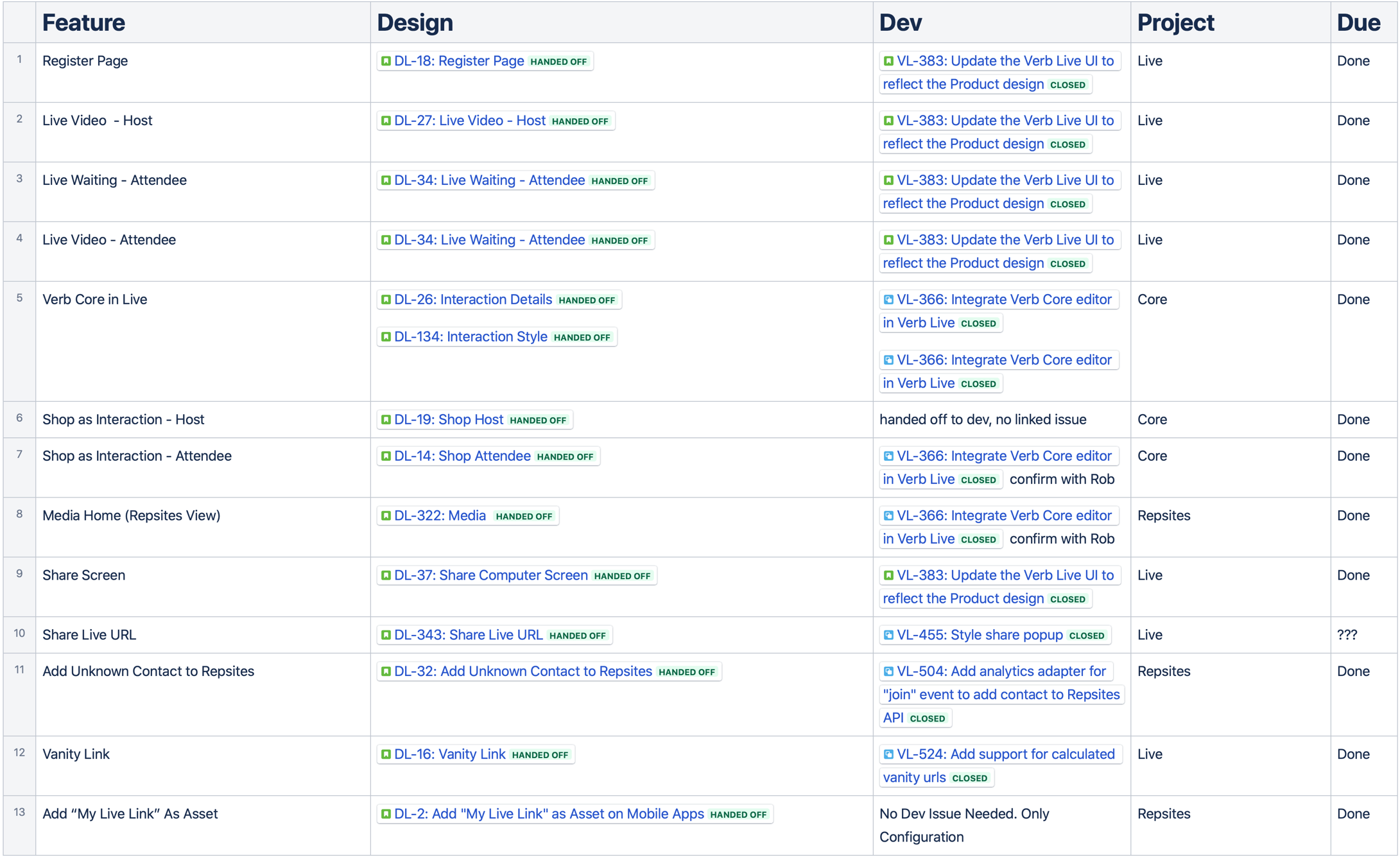
I assigned features to six designers (four product designers, two UX prototypers) based on their individual strengths. All handoffs required full Axure prototypes per stakeholder requirements. Each designer received approved user stories and feature specifications.
I created a structured Jira workflow organizing tickets by effort level, providing visibility into what was in progress and what remained. This transparency was critical for managing expectations with an executive team that consistently proposed features beyond team capacity.
Key Design Solutions
- •Panel component (Britt): a slide-in/out panel that merged the existing interaction toggle system with new live video capabilities, allowing regular check-ins throughout development
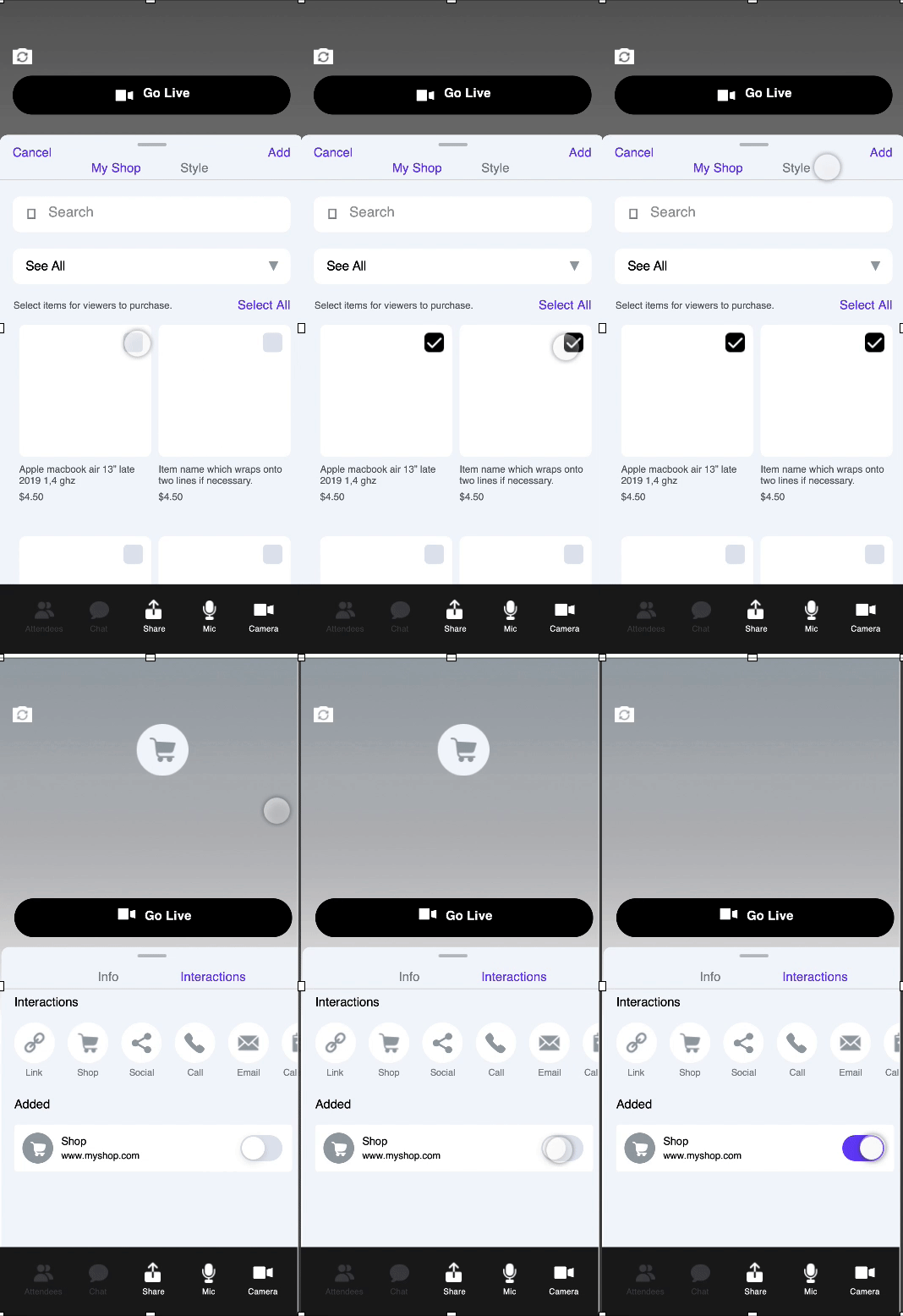
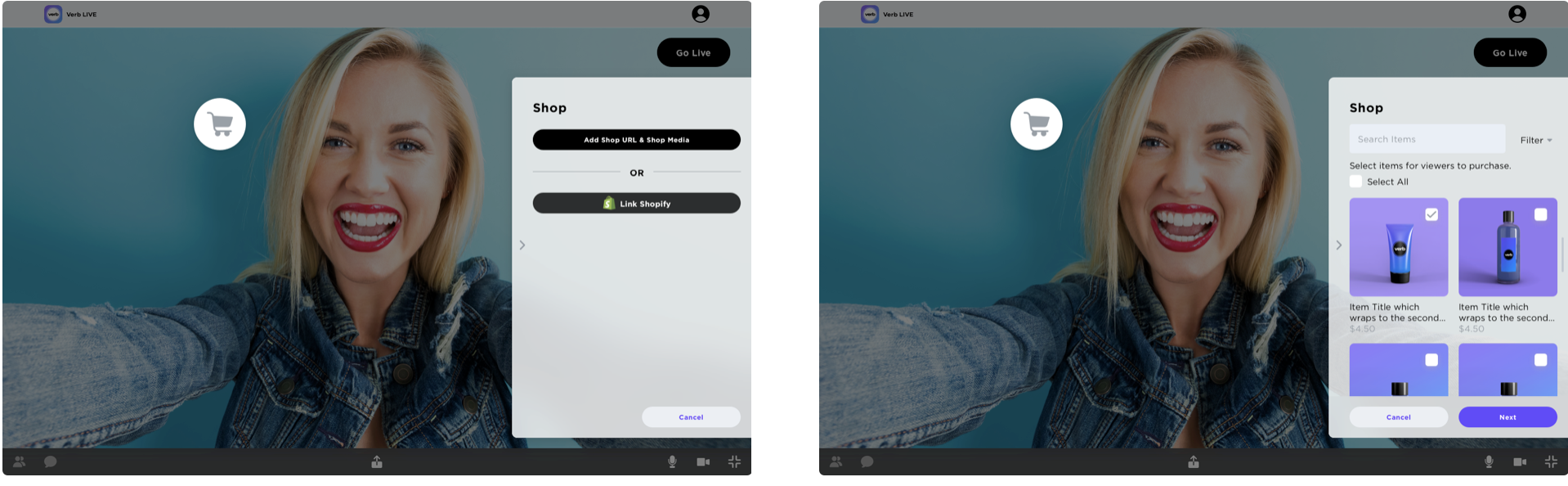
- •Shop feature (Kaitlan): separate but integrated user flows for Hosts (Shopify connection, product curation) and Attendees (browsing, purchasing during streams)
- •Control bar redesign: reorganized communication features (left), sharing (center), and personal controls (right) with full-screen viewing and simplified audio/video controls
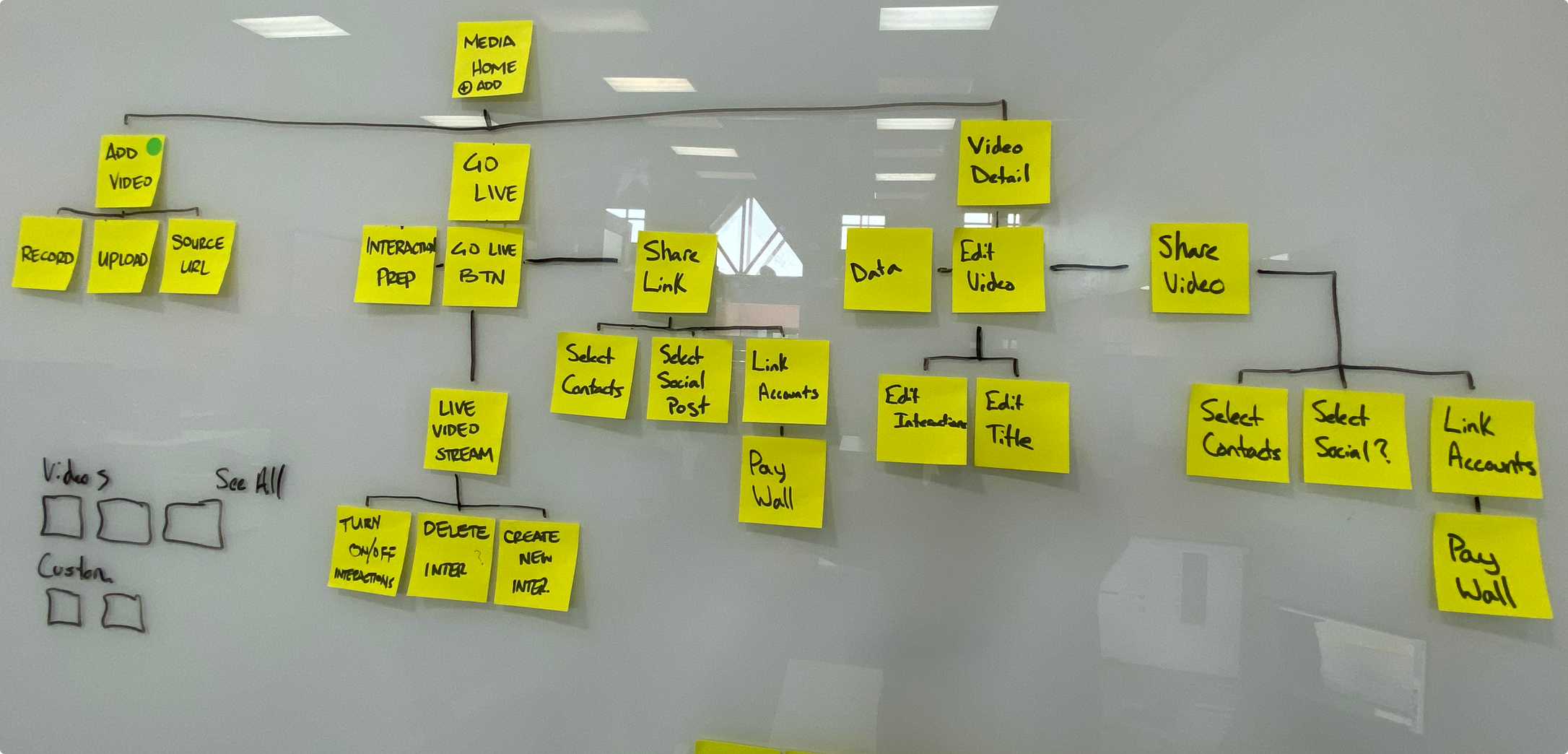
- •Visual sitemap that mapped the complete product architecture. Clarifying team understanding beyond what engineering had built
Crediting the Team
Britt designed the panel component. When I assigned it to her, she came back with a slide-in/out solution that merged the toggles with the live flow, exactly what the product needed. Kaitlan owned the Shop feature and built the dual-persona flows (Host signs into Shopify and curates, Attendee browses and buys mid-stream). Naming them here matters. The case study is the team's, not just mine.
Design Artifacts
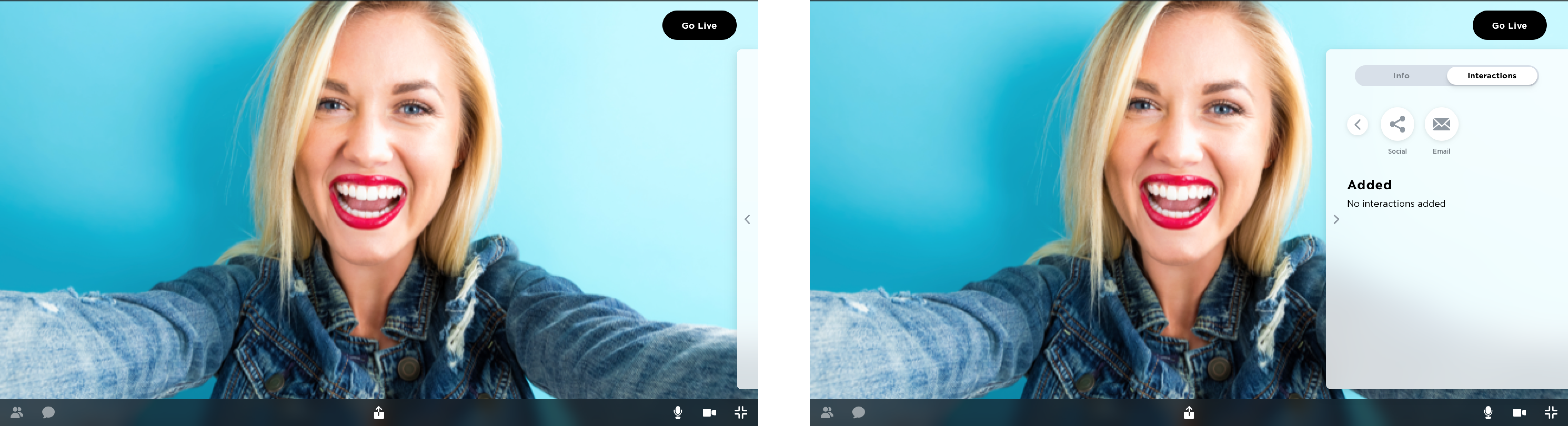

Prototype
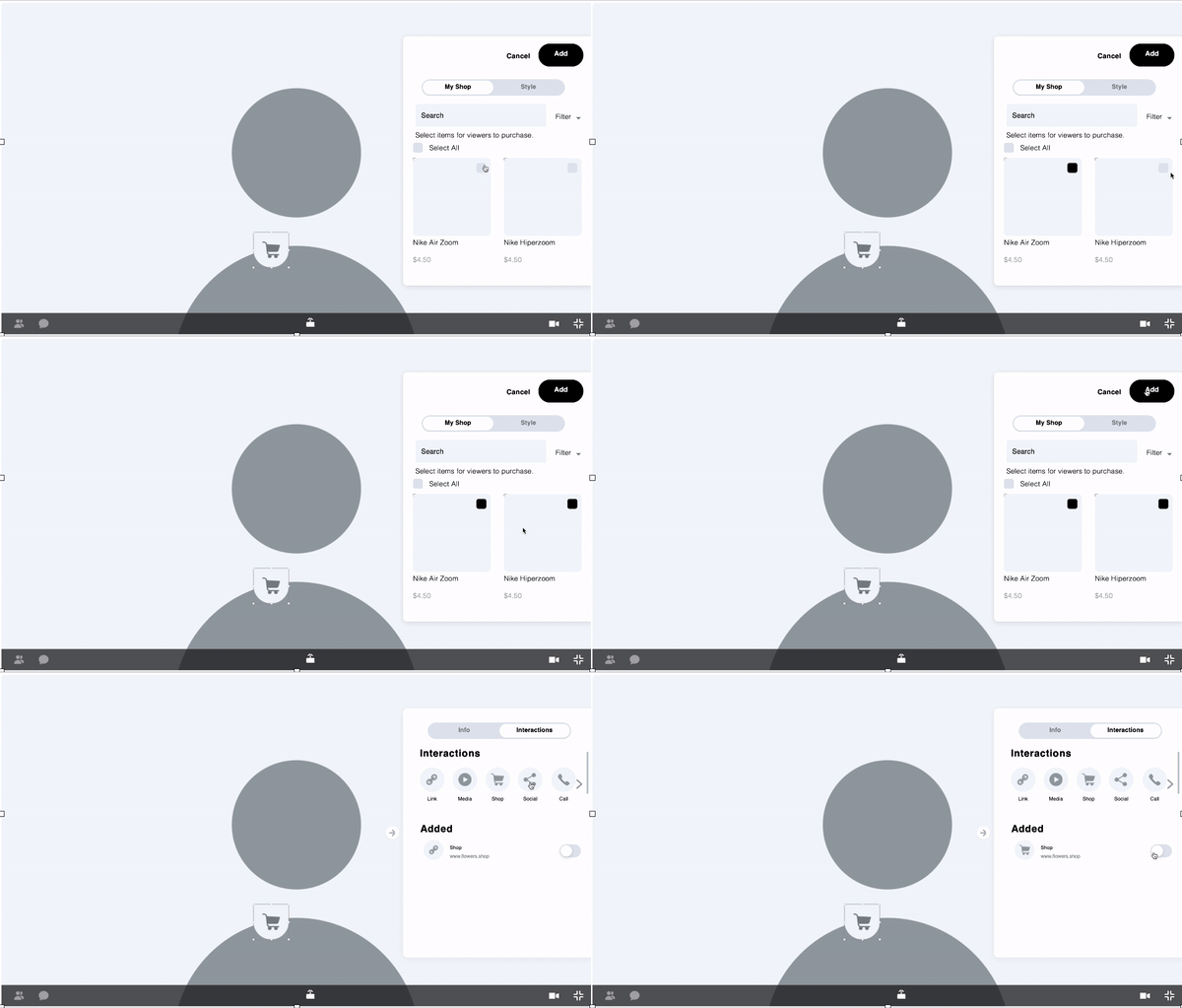
Final Design
Feature Prioritization
One of my most important contributions was saying no. Recurring feature proposals from leadership threatened to bloat the MVP beyond deliverable scope. I implemented structured prioritization, evaluating each request against user needs and team capacity, and communicated directly with stakeholders about what was realistic.
Features were categorized by effort level and moved in or out of the MVP scope based on impact and feasibility. Giving the entire organization clarity on what was being built and why.
Design Process
- •Journey mapping for both Host and Attendee personas to drive empathy-centered design decisions
- •Low-fidelity prototyping in Axure per stakeholder requirements
- •High-fidelity design elevating prototypes to production quality while integrating UX principles with Verb's brand identity
- •Regular design reviews and cross-functional check-ins to maintain alignment across the six-person design team
Reflection
This was my first design management role at this scale. Leading six designers while also contributing to the product vision. The biggest lesson was the importance of structured prioritization when stakeholder enthusiasm outpaces team capacity. Clear communication about trade-offs prevented burnout and kept the team focused on delivering a cohesive experience rather than a patchwork of features.
You’ve reached the end
Tell me what you’re building.
Pick a time. You leave with a price and a start date.